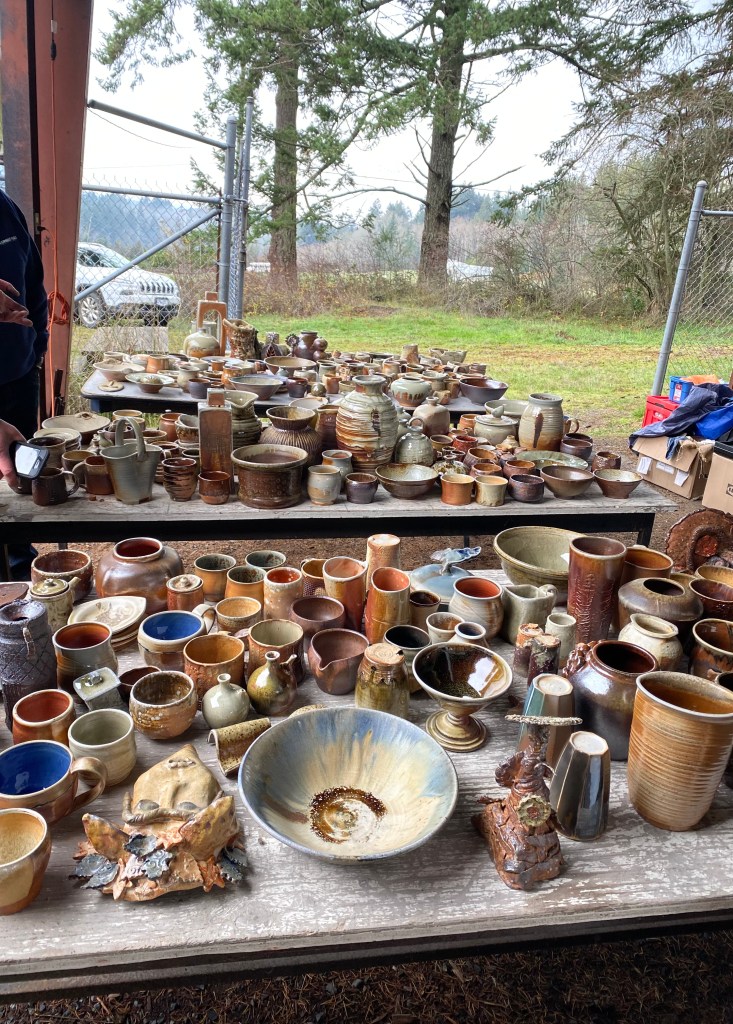
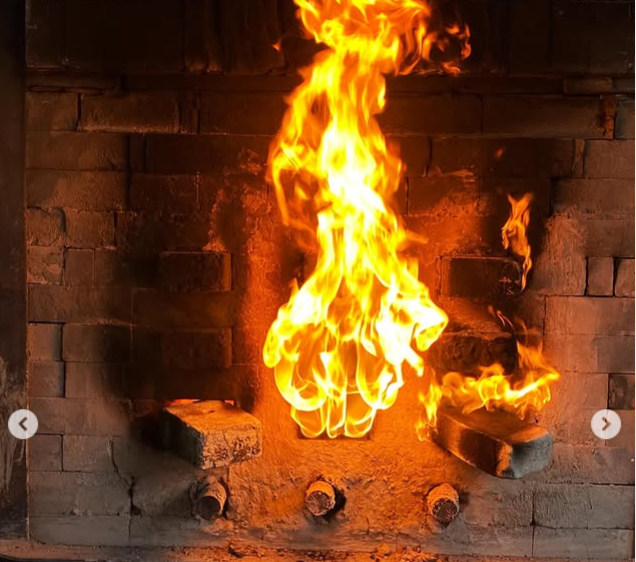
Wood-fired pottery is renowned for its rich, organic surfaces and unpredictable finishes. Each piece reflects the unique characteristics of the wood and the volatility of the firing process. The pieces are fired in three different wood kilns on Vancouver Island and on a small island off the coast of it.
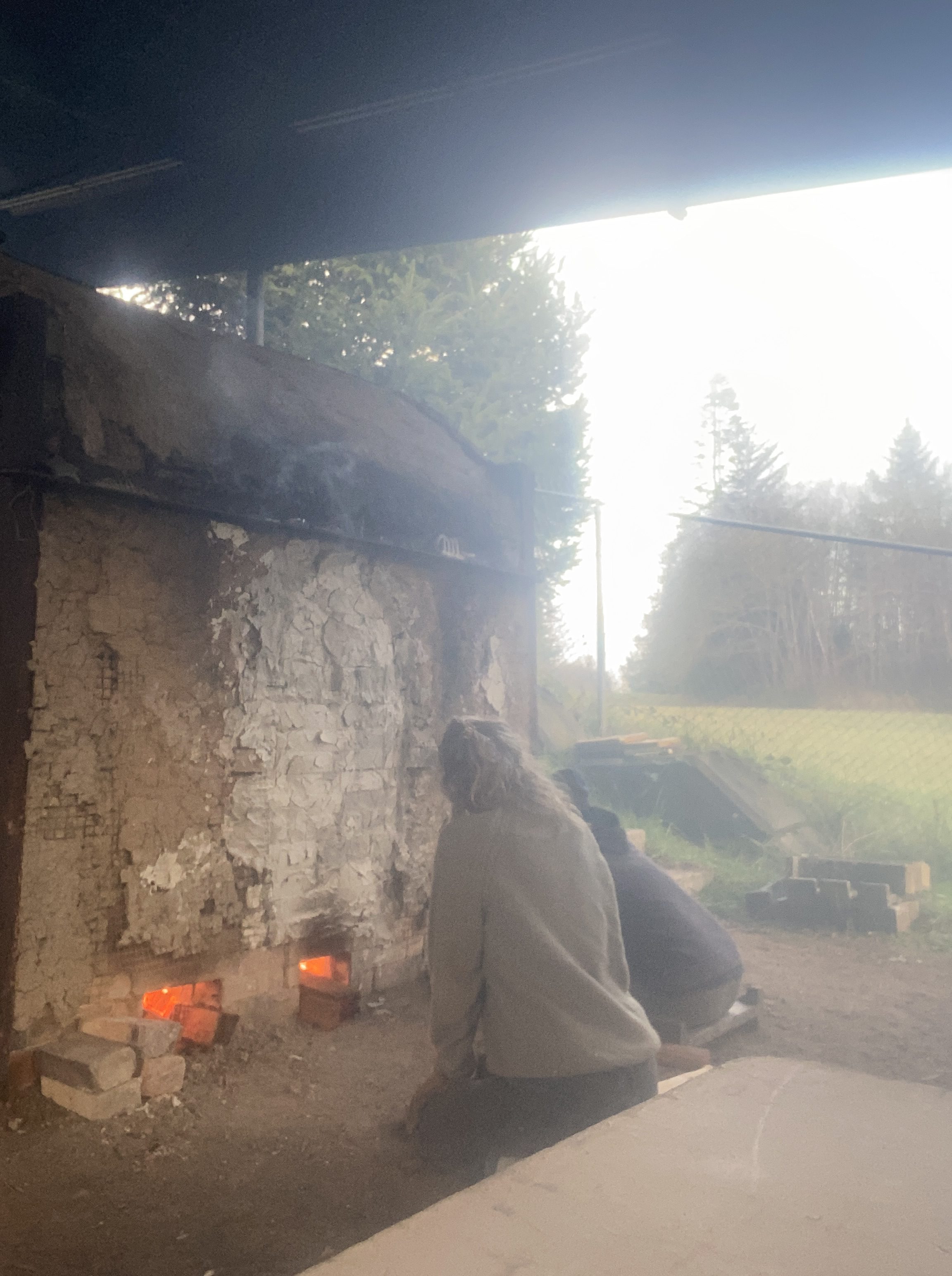
Wood-firing is an ancient technique used in pottery that involves the use of wood as the primary fuel source for the kiln. This method of firing not only influences the physical characteristics of the pottery but also adds unique aesthetic qualities to the finished pieces.
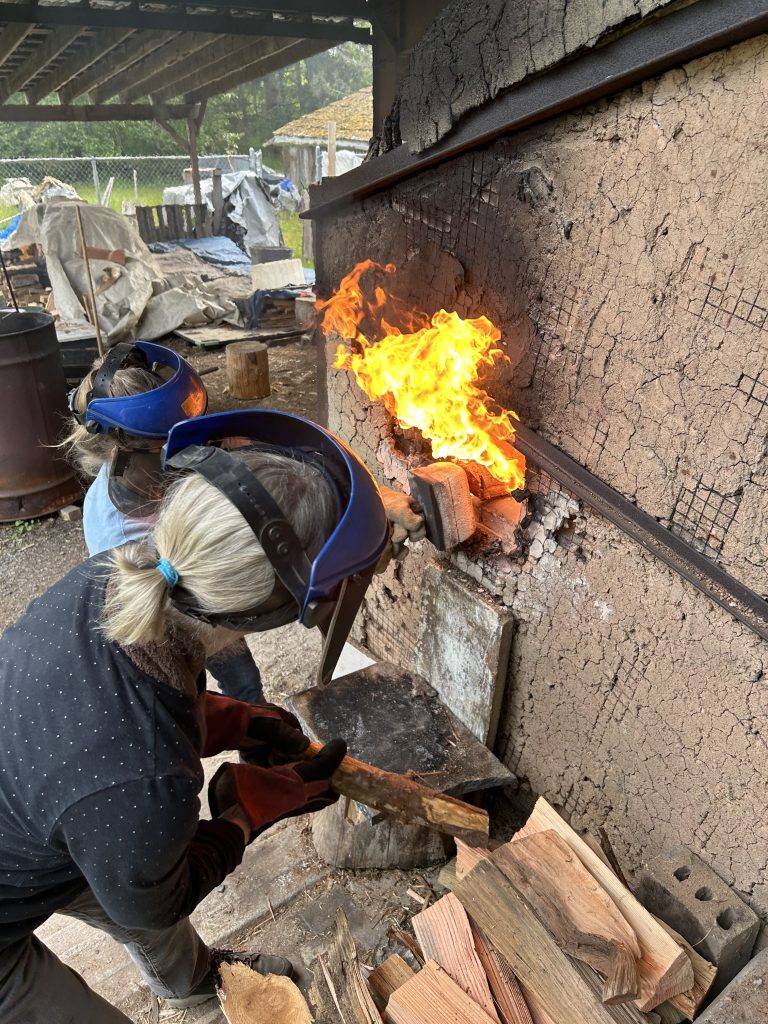
The Firing Process
- Kiln Preparation: The kiln must be carefully loaded with the pottery. The arrangement of pieces is crucial for ensuring that all items receive adequate heat and airflow. Wood is stacked strategically around the pots to optimize combustion and heat distribution.
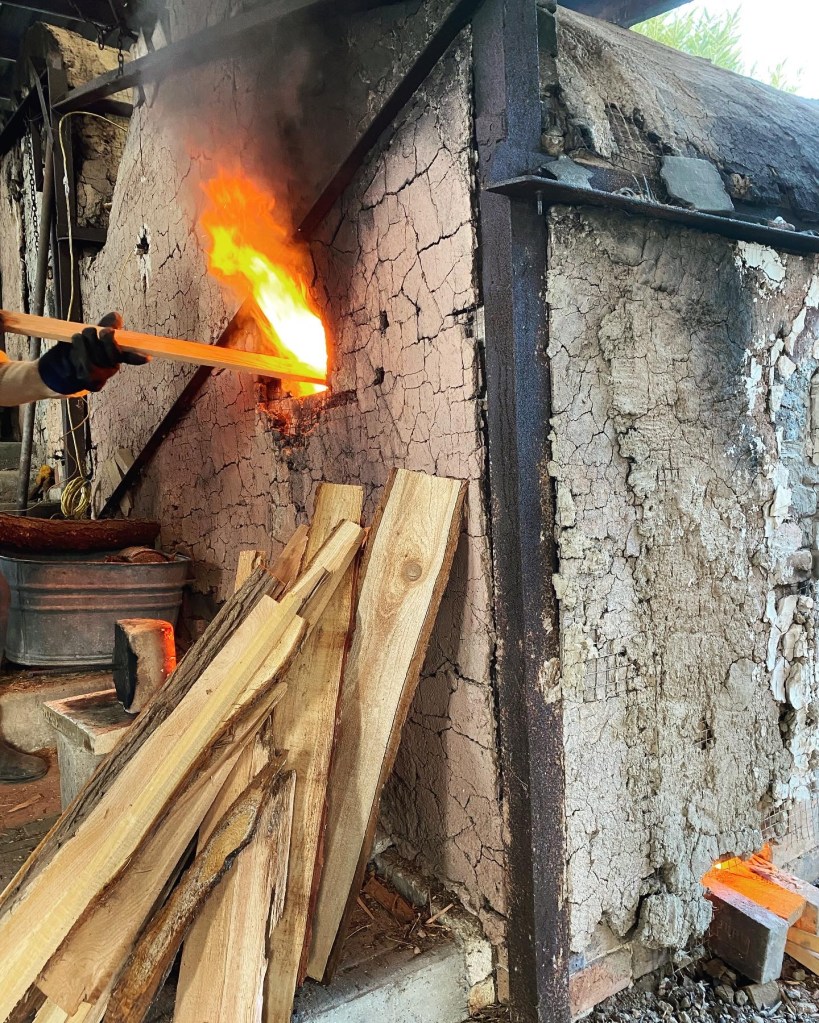
- Firing: Wood-firing can take anywhere from 24 hours to several days, depending on the kiln and the desired results. Potters maintain a steady feeding of wood into the kiln, managing the flame and temperature throughout the process. This requires constant attention and skill, as achieving the right atmosphere inside the kiln is essential for successful results.
- Reduction and Ash Effects: As the wood burns, it produces an ash that contributes to the glazing effects on the pottery. Different types of wood can create varied effects, influencing the colour and texture of the surfaces. The reduction atmosphere created by burning wood can also enhance the depth of colours and create unique markings.
Cooling and Unloading
After firing, the kiln is allowed to cool down gradually. This cooling period is critical as it helps prevent thermal shock to the pottery. Once the kiln has reached a safe temperature, the potters carefully unload the pieces, often revealing stunning surface colours, variations and textures. The wood-firing process is a blend of art and science, requiring skill, patience, and an understanding of materials.